What exactly is a dud cheque? Understanding the risks and consequences
Written by; Regina Bless
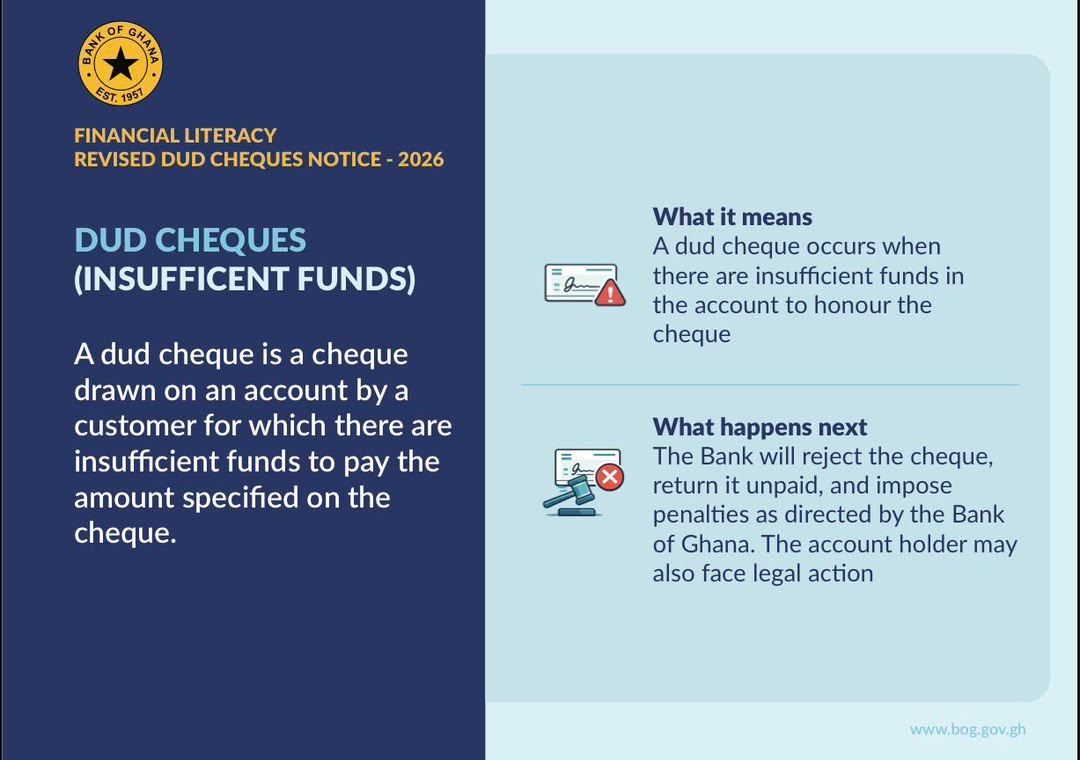
A dud cheque is a cheque issued from a bank account that does not have enough funds to cover the amount stated on the cheque.
When a person issues a cheque, the recipient expects the bank to honour it when presented for payment. However, if the account balance is insufficient, the bank may reject the cheque and return it unpaid.
According to the Bank of Ghana’s revised 2026 financial literacy notice, a dud cheque occurs when there are insufficient funds in an account to honour the cheque.
What happens when a cheque bounces?
Once a cheque is presented and the account lacks sufficient funds, the bank may reject and return it unpaid. The account holder may also face penalties in accordance with applicable banking rules.
In certain circumstances, issuing a dud cheque can also expose the account holder to legal action, making it important for individuals and businesses to ensure that their accounts are adequately funded before issuing cheques.
How can you avoid issuing a dud cheque?
Avoiding the problem starts with responsible financial management. Account holders should:
- Check their account balance before issuing a cheque.
- Ensure there are sufficient funds to cover the full amount.
- Consider pending transactions that could reduce the available balance.
- Keep track of deposits and withdrawals.
- Contact their bank if they are uncertain about the funds available for a payment.
A rejected cheque can affect financial relationships and create additional costs or legal complications.
The simple rule is: Know your balance, fund your account, and make sure your cheque will clear before issuing it.